
Personal trainer costs in Miami run about $35 to $90 an hour for one-on-one sessions, according to Thumbtack's Miami guide (checked September 2026). Nationally, Thumbtack's October 2025 guide puts the range at $40 to $100, with a $55 average. Small group personal training is priced per person, so the same coached hour usually costs a fraction of a private session. How much a personal trainer costs you each month depends on how often you train: twice a week at Miami private rates comes to roughly $305 to $780.
- One-on-one training in Miami runs about $35 to $90 an hour on Thumbtack (checked September 2026).
- Training privately twice a week at those rates adds up to roughly $305 to $780 a month.
- In ACE's 2014 and 2015 examples, small-group training cost roughly a quarter to a third of the private rate per person.
- Florida law allows penalty-free cancellation of a prepaid or installment studio contract within 3 days, excluding weekends and holidays.
- Compare what each quote includes: an assessment first, the coach-to-client ratio, session length and cancellation terms.

How much does a personal trainer cost per session in Miami?
The spread is wide, and some in-demand trainers charge well above the typical range.
| Source (date) | What it covers | Price per hour |
|---|---|---|
| Thumbtack Miami guide (checked September 2026) | Typical one-on-one rates in the Miami area | $35 to $90 |
| Thumbtack national cost guide (updated October 2025) | One-on-one rates nationwide | $40 to $100, $55 average |
| fitnesstrainer.com Miami listings (checked September 2026) | Eight featured Miami trainer profiles | $102 to $146 |
The featured profiles are a small sample from one marketplace, so read them as the high end. Thumbtack's Miami page adds that "the length of the session, as well as the number of sessions you book in advance, will have an impact on the price." Its national guide lists 30-, 60- and 90-minute sessions. A 30-minute session costs less, but it also gives you half the coaching time.
What actually drives the price
The hourly rate pays for much more than the trainer's time. For the Miami metro (Miami-Dade, Broward and Palm Beach counties), the federal Occupational Employment and Wage Statistics survey put the median hourly wage of employed trainers and group fitness instructors at $14.97 in May 2025. The top 10 percent earned $30.26 or more. The gap between those wages and a $35 to $90 client rate covers the facility, overhead and margin.
Those figures are what employers pay staff, not what clients pay, though some cost guides quote them as client rates. The survey also leaves out self-employed trainers, who set their own prices.
Three other factors move the price:
- Setting. Thumbtack's national guide says home visits and private studios cost more than gym-based sessions. Outdoor sessions are the least reliable: Miami-Dade heat and humidity, plus a wet season the National Weather Service's Miami office dates from May 15 to October 15, make a steady schedule hard to keep.
- Credentials. Florida doesn't license personal trainers, and ACE calls the fitness industry "largely unregulated", noting that anyone can claim to be an exercise professional. Ask whether a certification is NCCA-accredited, which ACE calls "the gold standard." ACE, NASM, NSCA and ACSM certifications all are.
- Packages. Thumbtack reports that buying 5, 10 or 20 sessions at once lowers the per-session rate.
One-on-one vs small group: the monthly math
Per-hour quotes hide the monthly total. This table multiplies Thumbtack's Miami range and its $55 national average by 4.33 weeks a month (52 weeks divided by 12).
| Private sessions per week | Sessions per month | Miami range ($35 to $90) | National average ($55) |
|---|---|---|---|
| 1 | about 4.3 | $150 to $390 | $238 |
| 2 | about 8.7 | $305 to $780 | $476 |
| 3 | about 13 | $455 to $1,170 | $714 |
Miami figures are rounded to the nearest $5 and national figures to the nearest dollar. To check any quote, multiply the per-session price by 4.3, 8.7 or 13.
Small group personal training cost works differently because the coach's hour is shared. In ACE's 2014 worked example, a private hour cost $65 while each person in a group of six or seven paid $20. A 2015 ACE example put a private session at $75 and small-group training at $20 per person per session. Those prices are more than a decade old, so use them for the ratio alone: per person, small group came to roughly a quarter to a third of the private rate.
Frequency is the other half of the math. The CDC's summary of federal guidelines calls for muscle-strengthening activity on at least two days a week, covering all major muscle groups, plus two and a half hours a week of moderate-intensity activity. Two coached sessions a week cover the strength part.
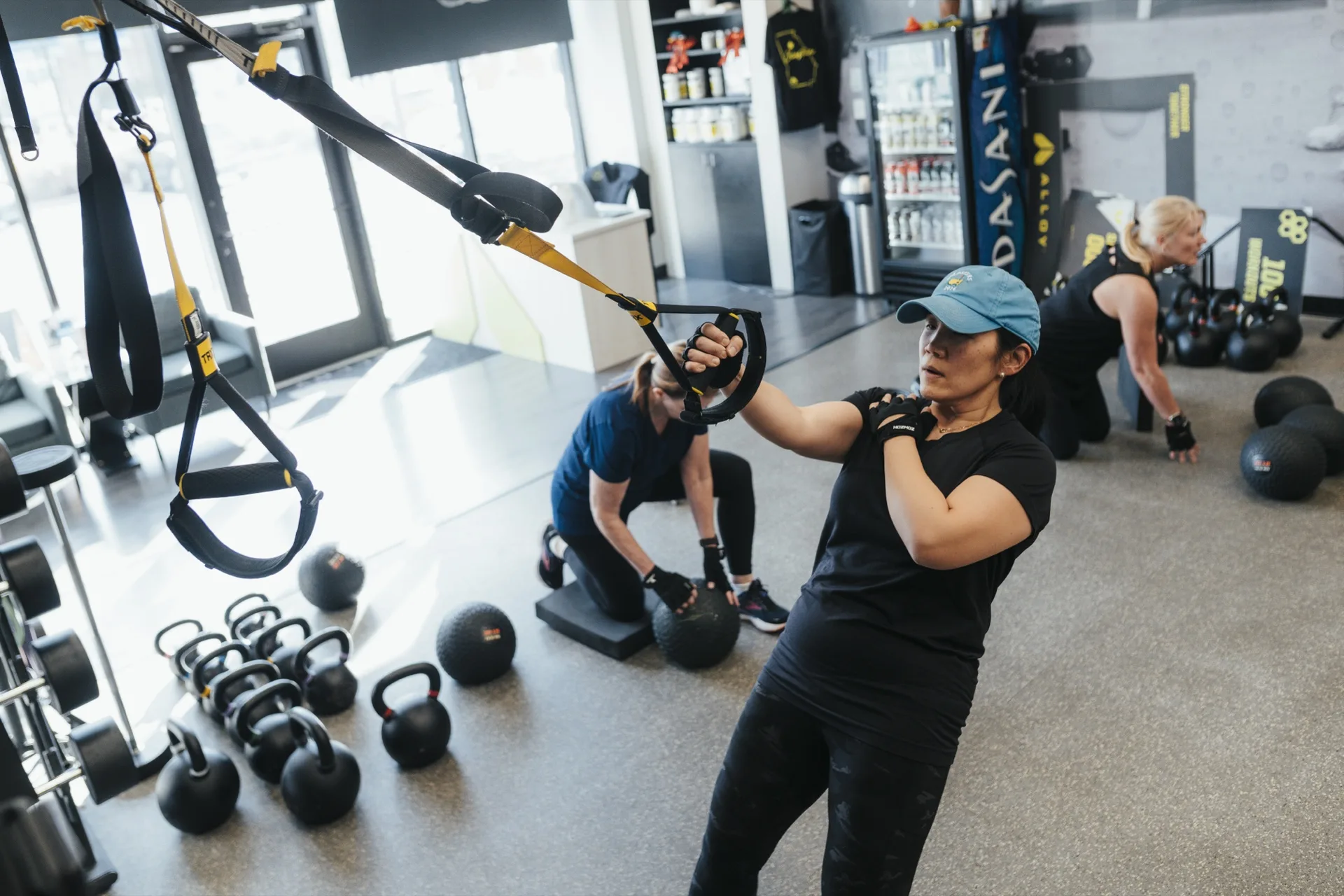
In our small group personal training, each 55-minute session is coach-led start to finish, capped at six clients per coach, and individualized to your abilities, limitations and goals. Our guide to small group training for adults over 40 explains how the format works day to day.
The costs that don't show up in the hourly rate
The hourly rate is rarely the whole bill. At big-box clubs, personal training is often sold on top of monthly dues, and Consumer Reports (2019) lists four more fee types at full-service clubs: initiation, processing, enrollment and annual maintenance. It suggests asking for "a copy of the fee schedule" and notes that some clubs require cancellation notice "two months in advance" or "a notarized letter."
Prepaid packages carry a different risk. Under Florida Statutes section 501.016, a health studio must post a $25,000 bond, letter of credit or certificate of deposit unless it's exempt. Exempt studios must print a capital-letter warning that a buyer who pays more than one month in advance is "PAYING FOR FUTURE SERVICES AND MAY BE RISKING LOSS OF YOUR MONEY." If you see that warning, weigh it before paying months ahead.
Ask, too, whether a late cancellation forfeits the session and whether unused sessions expire, since both raise your real price per workout.
What Florida law says about your studio contract
Section 501.017 of Florida's Health Studio Act applies to contracts for future health studio services that are paid in advance or by installments. It requires those contracts to be in writing, with these provisions "in at least 10-point boldfaced type":
- The right to "penalty-free cancellation of the contract within 3 days, exclusive of holidays and weekends," with a refund of all moneys paid (the studio may keep a pro-rated share for days or sessions already used).
- Cancellation and a refund if the studio "goes out of business, or moves its facilities more than 5 driving miles" from the contract location and "fails to provide, within 30 days, a facility of equal quality located within 5 driving miles" at no additional cost.
- Cancellation if the buyer dies or becomes "physically unable to avail himself or herself of a substantial portion of those services." A physician's certification may be required.
- An initial term that "will not be for a period in excess of 36 months, and thereafter shall only be renewable annually." A renewal "may not be executed and the fee therefor paid until 60 days or less before the previous contract expires."
Notice of cancellation must be in writing. The Florida Department of Agriculture and Consumer Services (FDACS) requires health studios to register, lets you check a studio's registration through its Business License Lookup, and suggests you "request trial periods."
Nor is there a federal click-to-cancel rule in force: the FTC's March 2026 notice restarting rulemaking on negative-option marketing refers to "the vacated 2024 Rule." This is a plain-language summary, not legal advice, so check your own contract against the statute and take complaints to FDACS.
Is $200 a month for a personal trainer good?
For private training in Miami, $200 a month is a light budget. Divided by Thumbtack's $90 and $35 hourly figures, it covers 2.2 to 5.7 one-hour sessions, so two to five whole sessions a month. That's anywhere from every other week to just over once a week, short of the two strength days a week in the federal guidelines.
Small group stretches the same money. If a coached small-group session costs a quarter to a third of the private rate, as in ACE's examples, $200 would cover roughly three to four times as many sessions.
Free options can fill the days between sessions. Evelyn Greer Park, next door to our studio on SW 124th Street, has a vita course with exercise stations and a walking and jogging track. The South Dade Trail runs 22 miles alongside the South Dade TransitWay on US-1, and the shaded Old Cutler Trail connects the area to Matheson Hammock Park on the bay. If you'd rather play than walk, Dante Fascell Park has dedicated pickleball courts.
How to compare quotes when you're over 40
Start with an assessment, not a package. If you have joint stiffness, an old injury or chronic tightness, the right loads and exercise choices matter more than the hourly rate. As coaches, we can't choose them well without first seeing how you move. The cheapest hour is no bargain if the program doesn't fit your body and you stop showing up.
That's why our Personal Fitness Assessment looks at your movement patterns, health history, goals and fitness baseline before any plan is written. It's also why functional mobility and joint-health work is built into each plan.
If you're managing pain or coming back from an injury, talk with your physician or physical therapist first; we're glad to coordinate with them. New or worsening pain belongs with a clinician. Our physical therapist vs personal trainer guide covers who to see first.
Then look at the ratio. ACE's 2019 small-group guidance calls four to five clients "ideal if you only have one coach," and one expert quoted there caps groups at eight per trainer. Before you pay anyone, ask:
- If it's a studio, what is its FDACS registration number?
- How do I cancel, and does notice have to be in writing?
- How long is each session, start to finish?
- How many clients share one coach?
- What happens to my sessions when I travel?
- What are the renewal terms, and when is a renewal paid?
Get a real number for your situation
The free Personal Fitness Assessment is where we give straightforward Pinecrest pricing, in person and with no pressure. A coach looks at how you move, talks through your health history and goals, measures your baseline and runs your first InBody scan. You leave with a personalized roadmap and the membership that fits, so book your free Personal Fitness Assessment and compare it against every number above.
Opening October 2026 at 8285 SW 124th Street. Our first 75 founding members get first pick of session times, priority onboarding, and our Founder's Rate. See founding membership.
This article is general fitness information, not medical advice. Talk with your physician before starting a new exercise program, especially if you have a diagnosis, a recent injury or surgery, or activity restrictions.